
This letter is not part of the fund prospectus or offering documentation of Farnam Street Capital Limited. Opinions expressed below are only those of the manager and shared for the interest of readers only. Qualitative terms like ‘great’ and ‘compounding’ are used only to explain the managers investing approach. Readers are instructed to look at the full disclaimers and fund prospectus.
Year End Investor Letter – September 2015
Dear Investors and Friends,
Farnam Street Capital (FSC) – NAV £120.36
Farnam Street Focused Fund (FSF) – NAV £88.66
This is the investor report for both Farnam Street Funds covering the period to September 2015. After all charges and costs the Farnam Street Capital Fund’s NAV has fallen by -8.6% to £120.36 during the year to September 2015. Since the Fund’s launch in November 2011 the NAV has increased 20.3% (or 6.2% annualised). Since the launch of the Farnam Street Focused Fund on 15th May this Fund’s value has fallen by 11.3%. For reference the FT Allshare Total Return Index is down 1.3% in the 12 months to September 30th and down 10.6% since May 15th.
Two Funds – One Approach
For the benefit of our new readers we remind all that we write to investors in our Funds every six months. We feel this is the right interval for doing so as it means we spend the bulk of our time investing or thinking, rather than dreaming up new thoughts for an investor letter. In truth after six months we are pretty keen to communicate with you and have a desire to do so as openly and candidly in a language we hope all can understand. Between these times however do feel free to get in touch if you have any queries.
Post the launch of our new UCITS Fund (Farnam Street Focused Fund) these investor letters now comment on both of the Funds we run – Farnam Street Capital (FSC) and Farnam Street Focused (FSF). Whilst small differences exist between the two Funds, most notably the eligibility of which type of investor can invest in each, the methodology under which the two are invested and the holdings they have are almost identical – as you will see below. The use of the ‘Farnam Street’ moniker is perhaps worth also explaining. Farnam Street in Omaha is the address where Warren Buffett spends each working day. As such we have used it as a subtle touchstone to remind ourselves daily to think and invest in a way consistent with his careful but hugely successful approach.
Interests Aligned
Whilst our main focus is on trying to ensure investor capital appreciates by wise stock selection we also know the detrimental effects that too high running costs can have on long term performance. As a result we work hard to keep these costs as low as possible in both Funds for your and our benefit. Those that work at Holland Advisors are collectively the largest investors in one of our Funds and the second largest in the other. Also Holland Advisors as Manager of both Funds only earns any performance fee in either Fund once an annual performance hurdle of 5% pa has been surpassed. The combination of these points hopefully illustrates that Manager and Investor interests are closely aligned.
Our Approach
If our investor numbers and followers are growing over time then each letter we write will have a blend of readers. Those dedicated amongst you, may have read every word we have written over the years, to others this may all be new. In a number of past letters we have repeatedly explained the investment process we use to analyse companies and run our funds. During that time we have also set up a website which lays this process out, we hope, quite clearly. We would encourage those new to us and our Funds to take a look both the website: www.hollandadvisors.co.uk and the attached document – ‘How we Invest and Think’. All previous investor letters are also available on the website.
That all said in the spirit of “tell them, tell them and tell them again” we will just reiterate two simple thoughts that perhaps best encapsulate our approach.
Firstly, we reiterate that we spend the bulk of our time looking for:
- Outstanding companies that are great operators in their chosen field
- Businesses models that make good, or great, returns on the capital needed to run them
- Great business managers who allocate capital wisely
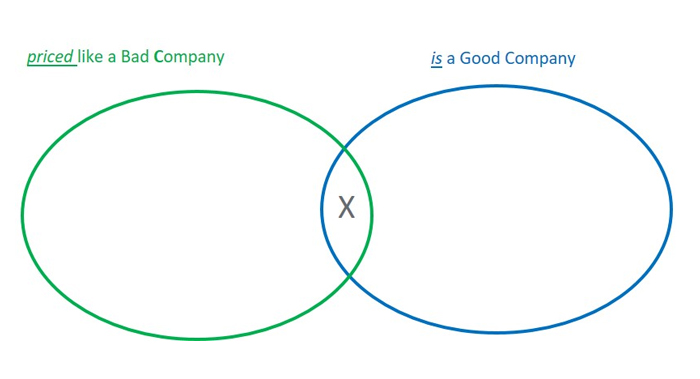
Secondly, we believe any successful investor needs to try to buy companies (or other assets) when others believe them not to be so, i.e. to be a contrarian, but to be a contrarian with bias towards great businesses. It is only when others disbelieve a company’s strength that its shares will be offered at an attractive price. In essence that is what we seek to do, buy great companies that are priced like bad ones.

The Economic + Investing Backdrop
In previous letters we have taken some time to outline the economic backdrop we are investing against. On this occasion we will only do so briefly as with both fund values falling in recent months we are keen to spend more time on what we are getting wrong (and right!) and why. We reiterate that we do not invest according to any macro predictions. The analogy we continue to use is that understanding the macro environment when investing is like using the mirrors in a car when driving. Our main focus is to reach our destination (i.e. superior investment performance via stock picking) but the macro environment (our car wing mirrors) gives us some perspective on what is happening outside the car/portfolio. As such like all drivers we need to check your mirrors once in a while.
We remain of the view that the US economy is in the midst of a strong sustainable and broad based economic recovery that was borne out of the extreme trough generated by the credit crisis. The US dollar strength that has resulted from this ongoing relative outperformance of the US economy is thus unsurprising.
Additionally we have in the past aired a cautious view on many periphery parts of Europe due to the severe deflationary forces that were put on them by their continued Euro membership and to an extent we feel vindicated in having had that view. During the last 12 months however two factors suggest a need to temper that stance. Firstly a number of those countries (Ireland and Greece are examples) have become much more competitive by significantly reducing their unit labour costs. This, we note, is both impressive and largely unnoticed by Euro perma-bears. Secondly, we have been impressed by the broad public determination in such countries to stay within the Euro project despite the huge scale of economic hardship many individuals and communities have suffered in recent years (the Greek vote being a key example). This suggests that the EU has not only survived the stiffest of popularity tests, but also as a function of the lower labour costs we observe it is arguably working (for a while at least) as the economic model as it was designed to.
China is much is the news of late and many it seems have a previously held view they wish to prove right, thus argue a case for, or against accordingly. We observe both that the forces of Urbanisation, Innovation and Consumerism have a long way to run yet in China. Equally we see, as others do, the possible overbuild of infrastructure in the last 5+ years and try to consider its consequential effects. As to the implications of those conflicting forces to investors in the wider world we are quite sure of our answer to that enormous question – we just don’t know.
The last point we would make on our investing backdrop was recently brought home to us on reading Anthony Bolton s excellent book ‘Investing against the tide’. In it he observed: “when evaluating the market outlook there are 3 things I particularly focus on and one I don’t consider. The one thing I don’t look at is the economic outlook”. To many this may be counter-intuitive but it resonated with us as previously we have observed that there are three distinct cycles that we need to be aware of as investors: The Political cycle, which mostly has little effect but occasionally catches investors off guard (e.g. Greece in 2015). The Economic cycle which is commented on often and over-analysed endlessly? Lastly there is a Stock-market cycle which is overlooked by many, has a life all of its own and is a function of the greed, fear and many other often merely psychological traits of its participants. The recent pull back in markets we observe is most likely just another stock-market cycle working its way though. Some are protracted, some short lived. All investors should accept them as part of the unpredictability of our friend Mr Market and use them for what they offer, i.e. the chance to buy companies, or even funds for that matter, at a price far better than that available to you only a month or two back.
How we are investing today
The FSC Fund is down 11% in the year to September and the new FSF Fund is down 11% since we launched it in May. Even if markets are down by similar amounts it is easy for both Investors and the Manager to be despondent, both on the assets owned and even the skills of the person doing the investing. Our prudent approach over the last few years mean we have previously sat on cash balances that have averaged 15-20% and cash and work-out percentages that may have averaged 20%. However, to state the obvious, that still meant c.80-85% of our Fund was invested in direct stock investment that are marked to market every day. Equally our new Fund is a UCITS structure and the rules of such funds do not allow a Manager to sit on more than 20% cash. As a result we were investing (we thought carefully) to match our new fund holdings with our existing ones, during the months of May-July. Had we known a sizable market sell-off was imminent we, of course, would have waited – hindsight as ever is cheap.
In a moment we will give a little more colour on our portfolio and what we could have done better in recent months but before we do we would like readers to reflect on the notion that an investment dollar can be worth more, or less, than the dollar in your pocket. This might seem odd, but the hard currency that you own will never be worth more than its face value today and arguably its value will depreciate in real terms over time. By contrast a dollar in invested in say Wells Fargo shares in May today is worth c.90cents, but we suggest could easily be worth $1.50 c.3years from now.
For each of the shares we own we have an estimate of their intrinsic value at a point a few years into the future. Part of that, we hope, increasing value is the growth we expect from the underlying franchise and part comes from an expected revaluation of the company we estimate Mr Market will one day undertake. Whilst a number of our estimates will be out and a few will be plain wrong each is considered prudently and importantly without any regard to the current share price. The result of which is that we have an idea (for it is only that) of what the annual rate of return might be on holding each individual share into the future. We also use this process to help us decide between the attractiveness of our holdings. As a result of this we are also able to see, post recent share price falls, a resulting increased expected return (substantially in some cases) from a number of our favoured holdings. The upside to such values is now the highest it has ever been in the 3-4 years we have been running these Funds. As a result of this we have been investing our cash balances over the summer months.
In short we think our current invested dollar is worth significantly more than its shown value today in the fund NAV’s and is more undervalued than at any time in the Funds past. So whilst it is easy for falling share prices to make an investor despondent we are excited about the prospect of future returns that today’s levels of undervaluation suggests.
Mistakes+ Learning Part 1
In our March letter this year we stated the following:
In our last two letters we spent time discussing the mistakes we have made. These being of Omission (i.e. the companies we had analysed well, but foolishly never bought) and Commission (i.e. those we did buy and shouldn’t have gone anywhere near). Sadly we are likely to keep making mistakes, but we try to learn from each one.
It is with little satisfaction we can report that on this projection we were 100% correct. In the last six months we have made more mistakes and learned yet more as a result.
The last few months have been testing for many investors, but as we observe above, such market cycles should be both expected and actually welcomed by the prudent investor who has kept cash on the sidelines to invest. We were in just such a position with both of the Funds going into the summer falls and so are delighted to have been able to invest in a number of new franchises that we had previously looked at and liked but who were not offered to us at low enough prices – that is the good news. The bad news is that having observed the lack of value on offer in quality franchise for the last year or two, we had sat on bigger cash balances, but also looked for more Special Situations and occasional deep value investments that we thought to have more specific risks rather than overall market risks. Here is where we have made mistakes. Our greatest mistake was, perhaps, in the back of our minds to consider these assets as better investments in less cheaply priced markets. Their valuations we assessed as cheap, but whilst we saw (and still see in most of them) opportunity in their recent problems, others saw risk. The result was that in many cases such companies share prices fell more, not less, than the overall market during a correction. To return to the thoughts of an investment dollar above, there is no mistake here if the assessed value is still correct as the upside potential should now be greater. Indeed we believe that to be the case in the majority of such investment we made. Nevertheless this was an interesting lesson in opportunity cost and portfolio construction, as had we just kept our core franchise holdings and made the hurdle higher for Special Situations to be included in the portfolio, we would have had even more dry powder available to invest this summer.
Mistakes + Learning Part 2
Many readers know that we have tried to learn from and copy many of the great investors, picking different skills from each. Many other managers will tend to focus on ‘deep value’ or say ‘franchises’. This specialisation does mean an investor in such funds can be sure exactly what type of portfolio they own, but we have always felt it limits a Manager, partiality if that style, for want of a better word, is popular and thus the stocks it favours are highly priced, as say high quality franchises are today. Additionally having studied Buffett extensively we found there were different points in his investing career where different styles contributed to his performance. Thus while we have a huge bias towards franchise investing and this is an area we have proven expertise in we have always perhaps been more open than other managers to the contribution deep value or special situation investing can contribute. Having spent more time in this area of late and in truth made a few mistakes we think it right to reflect on this.
The complexity of interlinked factors in Special Situations can mean that operational gearing may meet financial gearing and/or a new management and other outside factors. The result is that each situation looks unique and thus it is perhaps a little too easy to make a ‘one off’ case for each to enter a portfolio.
Having reflected on this and with markets lower we are making two slight changes to how we manage Fund assets:
- Pragmatically lower market prices now offer to us more of the franchises we have wanted to own all along at better prices than for some time. As a result we are actively broadening the list of franchise companies that we own.
- We are developing a checklist solely for Special Situation investments to use distinctively from the checklist we use for Franchises. This will likely make it harder for a Special Situation investment to get into the portfolio and thus improving the risk/reward of those we end up owning.
It is worth pointing out that this is firstly not a dramatic change as the percentage of the Funds invested in Special Sits in total has never been higher than c.20% of the Funds total assets, and after all one of our best ever investments (Dart Group) was a Special Sit. Additionally as we have been subtly making this change during the summer months while investing the initial capital of FSF Fund most of its capital has gone directly into a broader spread of franchise holdings.
In investment management you don’t get paid for the hours worked, you get paid for how successful you are. As a result we could consider the last four to six months wasted. During that time however we have learnt valuable lessons and found new investment ideas that we think others have overlooked that one day we think will prove fruitful for our performance. We have also learnt a huge amount about a wide variety of new businesses and industries, including nuclear power station construction companies, zinc recycling plants and even Greek banks! In investing, all knowledge is cumulative so we hope one day to make a return on that time invested.
Direct Stocks
- The Farnam Street Capital Fund (FSC) currently has 18 holdings equating to 86% of the Fund’s assets. Four of these holdings could best be considered Special Situation investments, representing 11% of the Fund.
- The Farnam Street Focused Fund (FSF) has 22 holdings (86% of fund assets), three of which are Special Situations representing 5% of Fund assets.
Those new to our letters maybe scanning down the page to see where we have profiled a stock we currently own – you may be disappointed! It remains our policy not to profile the companies that we own while we still own them. We have in previous reports discussed successes and failures once they have been sold, but on this occasion have spent more time outlining other areas. The reason for no stock profiling is because we feel in endangers reinforcement bias. We wrote about this using our experience with Tesco as an example in our September 2013 letter (see website). In short, investing is hard enough without the need to set yourself the pitfalls we think can occur if your rant and rave to all that will listen about how great one of your stocks is. By doing so we think you are creating a reinforcement bias that makes it hard to change your mind when it is right to do so. That said we hope investors feel they have both a good understanding of our approach and plenty of examples of it in the occasional research piece we distribute and post on the website. Some of these will be companies that we own, and others not, but we hope they give a thorough insight into the practical way we apply our investment approach to individual companies.
In the interest of openness however we have disclosed at the bottom of this report the five largest holdings we have in each Fund and each funds sector and currency exposure also. Investors will see from this our significant exposure to the banking sector where we continue to believe that a number of the largest US banking institutions are mispriced franchises. This is an exposure we have had for some time and the company holdings have changed little in the last few years. We have also now replicated this exposure in the FSF Fund as can be seen. The last point we would make on this exposure is perhaps to just outline that we see the shares we own in this sector as mispriced without any need from imminently higher interest rates. Clearly this type of exposure also made our NAV’s more sensitive to the recent market falls, something in the short term we think worth accepting for the long term return potential these powerful, undervalued franchises bring.
Work Outs + Cash (14% of FSC) (14% of FSF)
At the time of writing the cash percentage holdings of the respective Funds were FSC (8%) and FSF (9%). As commented on above both cash balances have been reducing notably in recent months as more and more better priced franchises are now on offer.
The Work-Out part of the portfolio’s today has one new holding in both Funds (valued at c.5% in each fund) and an additional 1% older holding in the FSC Fund. During the last six months both Funds successfully participated in three other work-outs investment that yielded good annual IRR’s with limited extra market risk. We continue to search for ideas in this area and believe it still to be it to be a good use of our cash balances supplementing the low income they would otherwise generate.
As was stated at the outset of this note we are now writing for the benefit of a broad range of investors with differing knowledge of our process and of the wider investing world. As such if you have questions or wish to discuss the contents of this letter more fully please do get in touch.
With kind regards,
Andrew Hollingworth, Fund Manager
Friday 16th October 2015
This report is given as an aide to investors. It does not form part of the official documentation for either fund. Any figures given above are to be managers’ best estimate but are not audited.
This document does not constitute an offer or solicitation to buy or sell any security, fund or other financial instrument in any jurisdiction. It is the responsibility of any person reading this document to observe all applicable laws and regulations in the jurisdiction in which they reside. Any prospective or existing investors in the Funds discussed in this document should refer to the relevant Prospectus, or Private Placing Memorandum, for full information and if in any doubt consult a suitably qualified Financial Advisor.

